

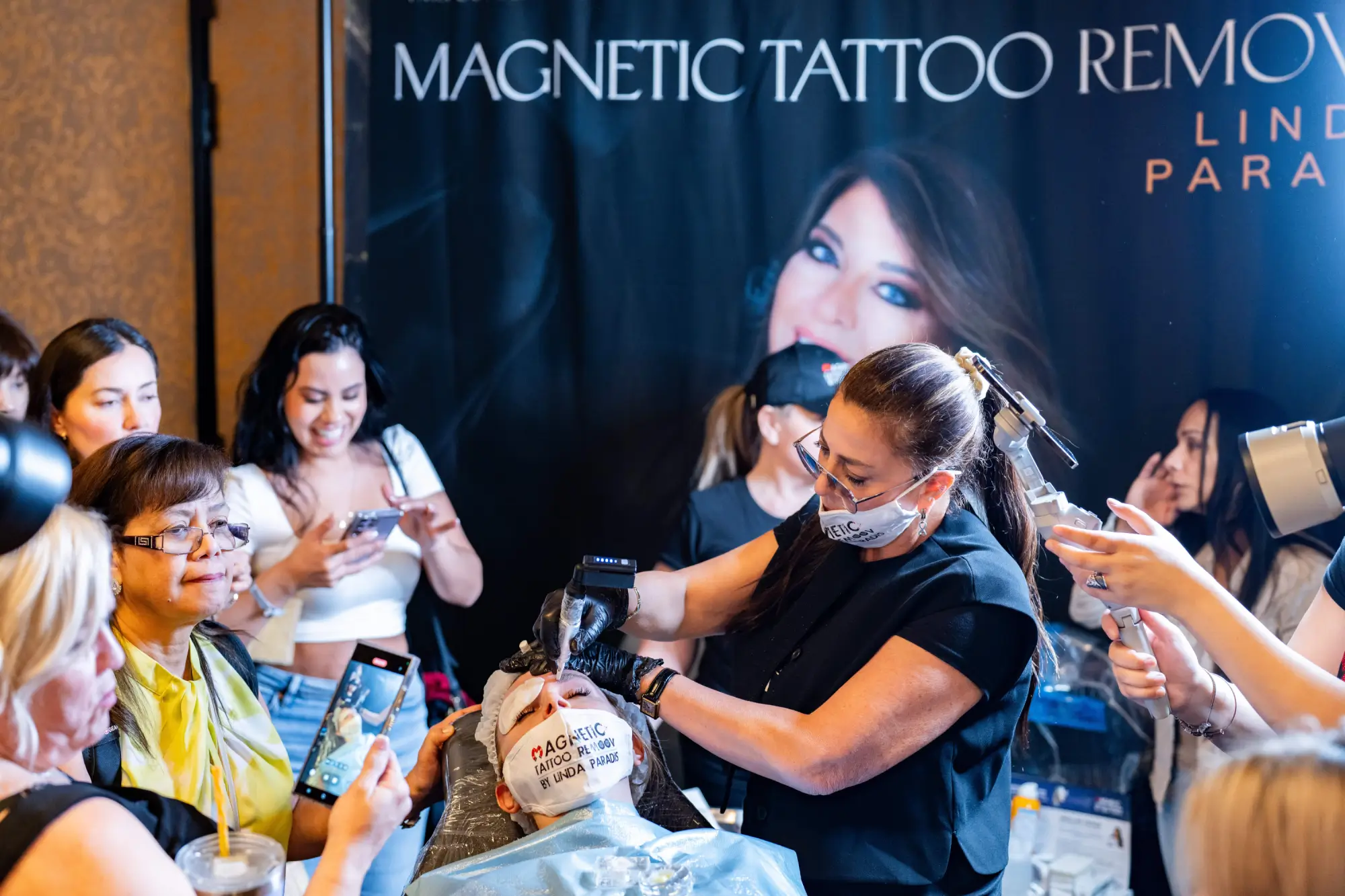
Getting a tattoo is exciting — but for many people, that excitement fades over time. Whether it is a body tattoo, microblading, or permanent makeup that no longer suits you, removing permanent ink is a serious decision that deserves accurate information. Laser tattoo removal is the most widely known method, but it is not the only one — and it is not always the best fit. Laser treatments are expensive, typically require multiple sessions, and carry risks such as hypopigmentation, blistering, and scarring, particularly on delicate areas like the brows, lips, and eyelids.
Below is a professional overview of the most effective laser tattoo removal alternatives available today, including non-invasive options suitable for both body tattoos and permanent makeup removal — for anyone researching how to remove tattoos without laser treatment.
1. Magnetic Tattoo Removal — Non-Laser, Non-Acid, Non-Invasive
Magnetic Tattoo Removal (MTR), invented and patented worldwide by Linda Paradis, is a non-laser tattoo removal technique that extracts pigment from the skin without lasers, acids, or saline abrasion. The method uses patented magnetic needles (88RS) combined with the E-DERMIS Ink Extractor Solution, formulated at a skin-compatible pH of 8.5.
Because the technique lifts pigment out of the skin rather than fragmenting it with light energy, it is suitable for microblading removal, eyebrow tattoo removal, eyeliner and lip tattoo removal, scalp micropigmentation removal, and body tattoos — including ink colors that lasers struggle with, such as white, yellow, and flesh tones.
- ◆No laser, no acid, no saline abrasion — pigment is extracted, not burned or fragmented
- ◆Skin-safe — designed to preserve the skin barrier, with no scarring when the protocol is followed correctly
- ◆Effective on all pigment colors, including those resistant to laser wavelengths
- ◆Suitable for sensitive zones — brows, lips, eyeliner, and scalp
- ◆Certified practitioners trained in the patented MTR protocol, in more than 40 countries
Learn more about how Magnetic Tattoo Removal works or view real tattoo removal before and after results.
2. Saline Tattoo Removal
Saline removal is a common alternative for permanent makeup. A saline solution is implanted into the pigmented area using a tattoo device, drawing pigment toward the surface of the skin through osmosis, where it scabs and lifts away during healing. While gentler than lasers for small PMU areas, saline removal still creates a controlled wound, requires multiple sessions, and results depend heavily on the practitioner’s skill and the client’s aftercare. Saline removal for microblading is among the most requested corrections in the PMU industry, though extraction-based, non-acid alternatives now offer a gentler path for the same concerns. It is generally not practical for larger body tattoos.
3. Intense Pulsed Light Therapy (IPL)
Intense pulsed light therapy uses broad-spectrum light delivered through a handpiece applied to the skin. The light energy targets pigment in the dermis, and the body gradually eliminates the fragmented particles — a mechanism similar to laser removal. IPL can fade certain tattoos, but because the light is non-coherent and less targeted than a true laser, results are less predictable, and the risk of burns or pigmentation changes is higher on darker skin tones. IPL is generally better suited to skin rejuvenation than to dedicated tattoo removal.
4. Surgical Excision Tattoo Removal
Surgical excision physically removes the tattooed skin, after which the area is closed with stitches. It can be effective for very small tattoos, but it is an invasive medical procedure performed under local anesthesia, and it always leaves a surgical scar. For most clients — and for any facial or PMU work — excision is not an appropriate option.
5. Dermabrasion Tattoo Removal
Dermabrasion removes the upper layers of the skin using an abrasive device, often combined with a saline solution, so that pigment is gradually eliminated as the skin heals. The procedure creates an open wound that requires careful aftercare with antiseptic and healing products, with recovery typically taking several days between sessions. Because it works by controlled skin injury, dermabrasion carries a meaningful risk of scarring and uneven texture, and is rarely recommended today when gentler alternatives exist.
6. Cover-Up Tattoo
A cover-up is not a removal method, but it remains a popular option: a new tattoo is designed to conceal the existing one. Cover-ups work best on small, faded designs and require a skilled artist, since the new tattoo must be darker and often larger than the original. Many artists actually recommend fading the old tattoo first — with a method like Magnetic Tattoo Removal — to give the cover-up a cleaner canvas.
7. Chemical & Oxidation-Based Removers (e.g., Eliminink)
Some removal systems implant a magnesium-oxide-based solution into the skin using a permanent makeup device. The solution binds to the pigment and draws it out through oxidation as the skin heals. These methods were originally developed for permanent makeup correction. They can be effective in trained hands, but acid- and oxidation-based products carry a higher risk of chemical irritation, hyperpigmentation, and scarring compared with pH-balanced, non-acid extraction techniques.
How to Choose the Right Tattoo Removal Method
The right technique depends on the type of pigment, the location on the body, your skin type, and your tolerance for downtime and risk:
- Microblading, eyebrow, lip, or eyeliner tattoos: choose a non-laser, non-acid method designed for delicate facial skin. Lasers near the eyes and lips carry elevated risks, including damage to brow hair follicles.
- Multicolored or light-colored ink: lasers target specific wavelengths and often cannot break down white, yellow, or flesh-tone pigments. Extraction-based methods remove pigment regardless of color.
- Darker skin tones: light-based methods (laser, IPL) carry higher risks of hypo- and hyperpigmentation. Non-laser extraction avoids this mechanism entirely.
- Large body tattoos: discuss a session plan with a certified practitioner; hybrid protocols combining methods may be recommended by professionals.
Conclusion
Laser is no longer the only serious option for removing unwanted tattoos and permanent makeup. Among the alternatives, Magnetic Tattoo Removal stands apart as the only worldwide-patented, non-laser, non-acid, non-invasive extraction technique — developed by inventor Linda Paradis and practiced by certified professionals in over 40 countries. If you are considering tattoo, microblading, or PMU removal, consult a certified MTR practitioner to assess your pigment, skin type, and the safest removal plan for your case.
Train directly with inventor Linda Paradis and join 2,000+ certified practitioners in over 40 countries. Online programs, live Zoom master classes, and hands-on perfection training — add the world’s only patented non-laser removal technique to your services.
Explore Training Programs Speak With Our Team