

Maybe you want eyebrow tattoo removal, microblading removal, permanent makeup removal, or full body tattoo removal. The question is always the same. Which method is truly safe and effective, and won't leave you worse off than before?
Linda Paradis developed Magnetic Tattoo Removal® after 25 years of research at the intersection of medicine and aesthetics. It is a patented, non-invasive protocol. Over 2,000 certified practitioners in 40+ countries now trust it.
This article covers everything you need to know. You will learn how the technique works and how it compares to laser and saline removal. You will also see what results look like before and after, how many sessions you need, and whether it hurts. Let's start with the science.
What Is Magnetic Tattoo Removal® and How Does It Work?
Magnetic Tattoo Removal® is a patented, non-invasive technique for tattoo and permanent makeup removal. It combines specialized Non-Invasive Magnetic Needles with the E-Dermis Ink Extractor Solution. Together, they draw pigment out of the skin — without lasers, gently, and without downtime.
The core principle is extraction, not fragmentation. Laser breaks ink molecules into smaller fragments and disperses them into the bloodstream. Magnetic Tattoo Removal® works differently. It creates a controlled chemical reaction at the epidermal level. That reaction pulls pigment toward the surface of the skin, and the body eliminates it entirely.
"While lasers push molecules further into the skin, our technique pushes them out. We clean the skin — we don't disperse pigment deeper into the body."
— Linda Paradis, Inventor of Magnetic Tattoo Removal® & Founder, Linda Paradis GroupThe technique uses three proprietary needle configurations, depending on the treatment area:
- 88 Non-Invasive Magnetic Needles — for eyebrow and lip tattoo removal
- 52 Non-Invasive Magnetic Needles — for eyeliner tattoo removal
- 132 Non-Invasive Magnetic Needles — for Snow Lips, Detox Lips, and Detox Brows
Each needle configuration is square-shaped. This means it surfs the surface of the epidermis rather than penetrating the dermis. That is the key safety differentiator. No dermal penetration means no collagen stimulation cascade, and zero risk of keloid scarring.
Does Tattoo Removal Hurt? What to Expect
Does tattoo removal hurt? With conventional laser, yes — significantly. The heat-based mechanism generates intense thermal energy. Most clients describe it as a rubber band snapping again and again across the treatment area. Swelling and sensitivity then last for days.
With Magnetic Tattoo Removal®, the experience is fundamentally different. There is no heat and no dermal penetration. As a result, most clients report minimal discomfort, comparable to light surface pressure.
You will feel no burning, no blood, and no prolonged post-treatment sensitivity. Clients can return to normal activity right after a session, including swimming.
This is not a minor distinction. Comfort matters most on facial areas, such as eyebrow tattoo removal, eyeliner removal, and lip tattoo removal. The delicate skin around the eyes and lips makes high-heat methods both more painful and more risky. For that reason, engineers designed Magnetic Tattoo Removal® specifically for these zones.
Magnetic Tattoo Removal® — Clinical Protocol Summary
- Non-Invasive Magnetic Needles — no dermal penetration
- E-Dermis Ink Extractor Solution — pH 8.5–9.5 alkaline, 40% purified water
- No collagen stimulation → zero keloid risk
- Pigment extracted from the body — not dispersed into bloodstream
- No heat, no burning, no peeling — gentle on the skin
- Hair follicles fully preserved
- Effective on all ink colours including white, yellow, green, and blue
- Safe for all skin tones — Fitzpatrick types I through VI
Eyebrow Tattoo Removal & Microblading Removal: Why This Method Is Different
Eyebrow tattoo removal and microblading removal make up the largest and most technically demanding segment of the non-laser removal market. They are also the segment where laser consistently fails.
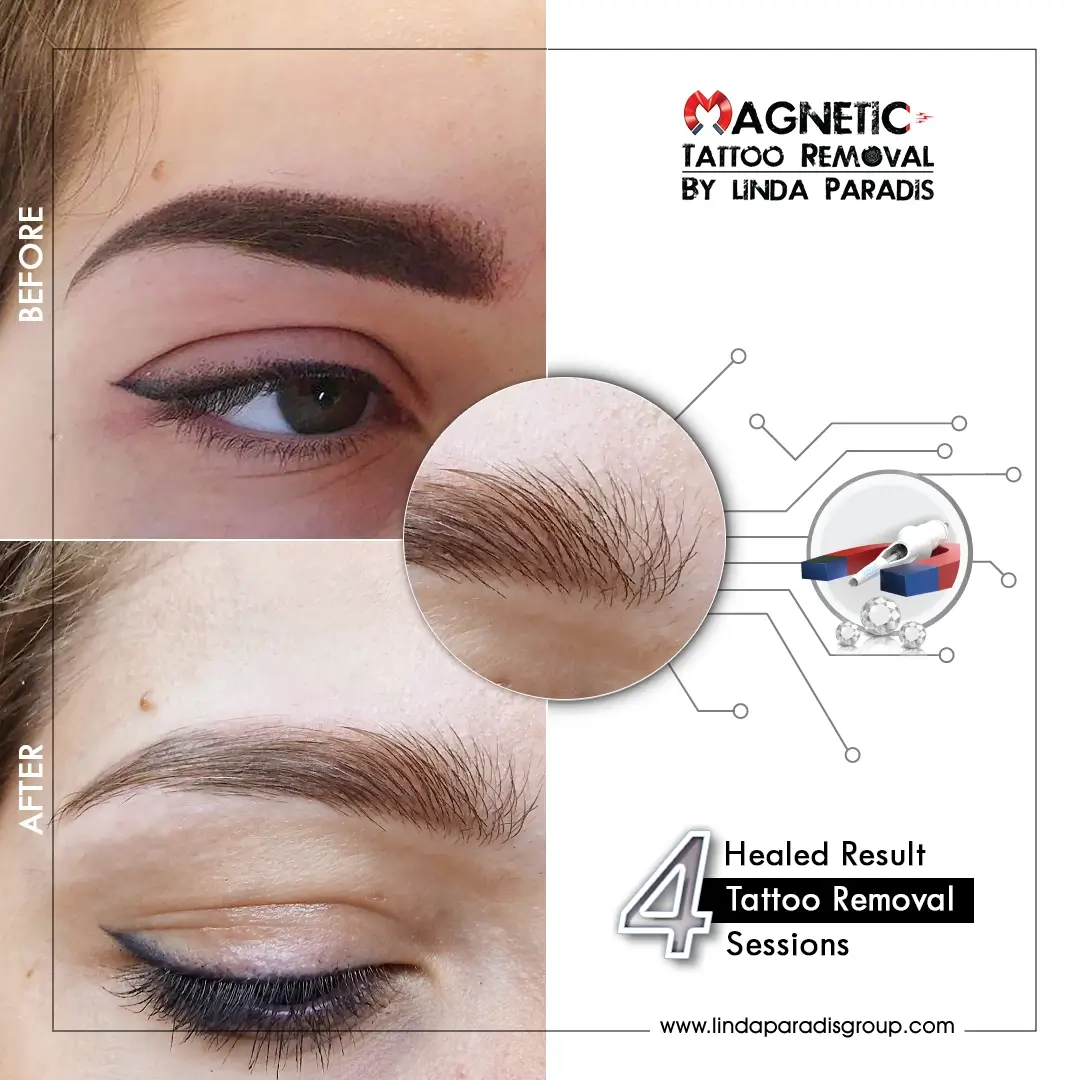
Before & After — Microblading Removal · Magnetic Tattoo Removal®
The reason is simple. The periocular zone (the area surrounding the eyes) is too sensitive and too vascular for high-energy laser pulses. The risk of thermal injury, pigment migration, and permanent follicle damage is substantial. Most laser providers refuse to treat eyebrows at all. Others require several consultations before they approach the area.
Linda Paradis designed Magnetic Tattoo Removal® from the outset for precision facial work. The 88-needle configuration glides across the brow area without heat. It does not penetrate the follicle root, and it does not displace pigment sideways.
Results from microblading removal typically become visible after the first session. Full clearance then follows progressively across later treatments.
The same principle applies to permanent makeup removal across all facial zones. These include lips, eyeliner, areola restoration, and scalp micropigmentation. Safety margins are narrow in these areas, and the consequences of scarring are high.
Regulators also pay close attention to pigments and procedures like these. You can read the official FDA guidance on tattoos and permanent makeup for background on safety.
Tattoo Removal Before and After: What Real Results Look Like
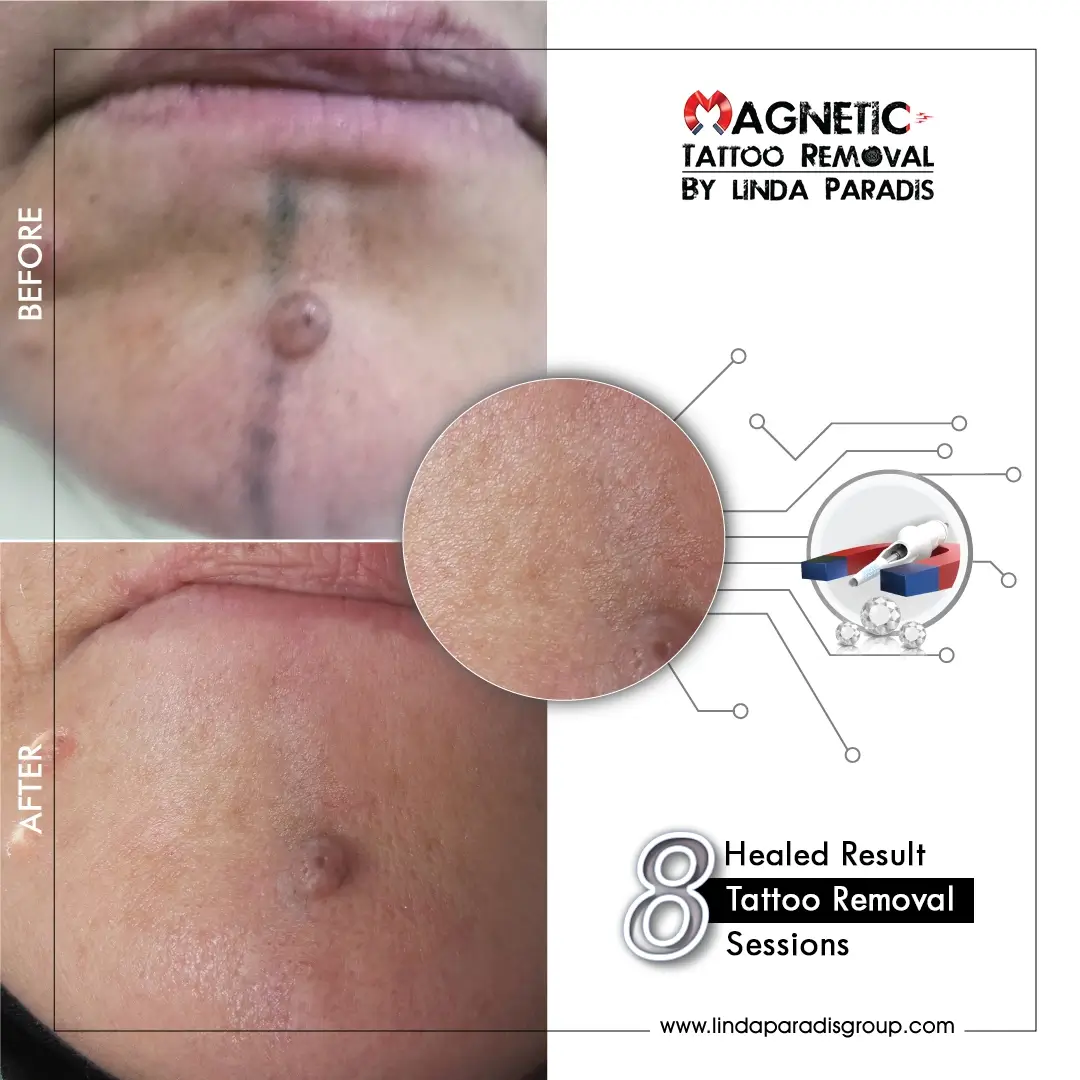
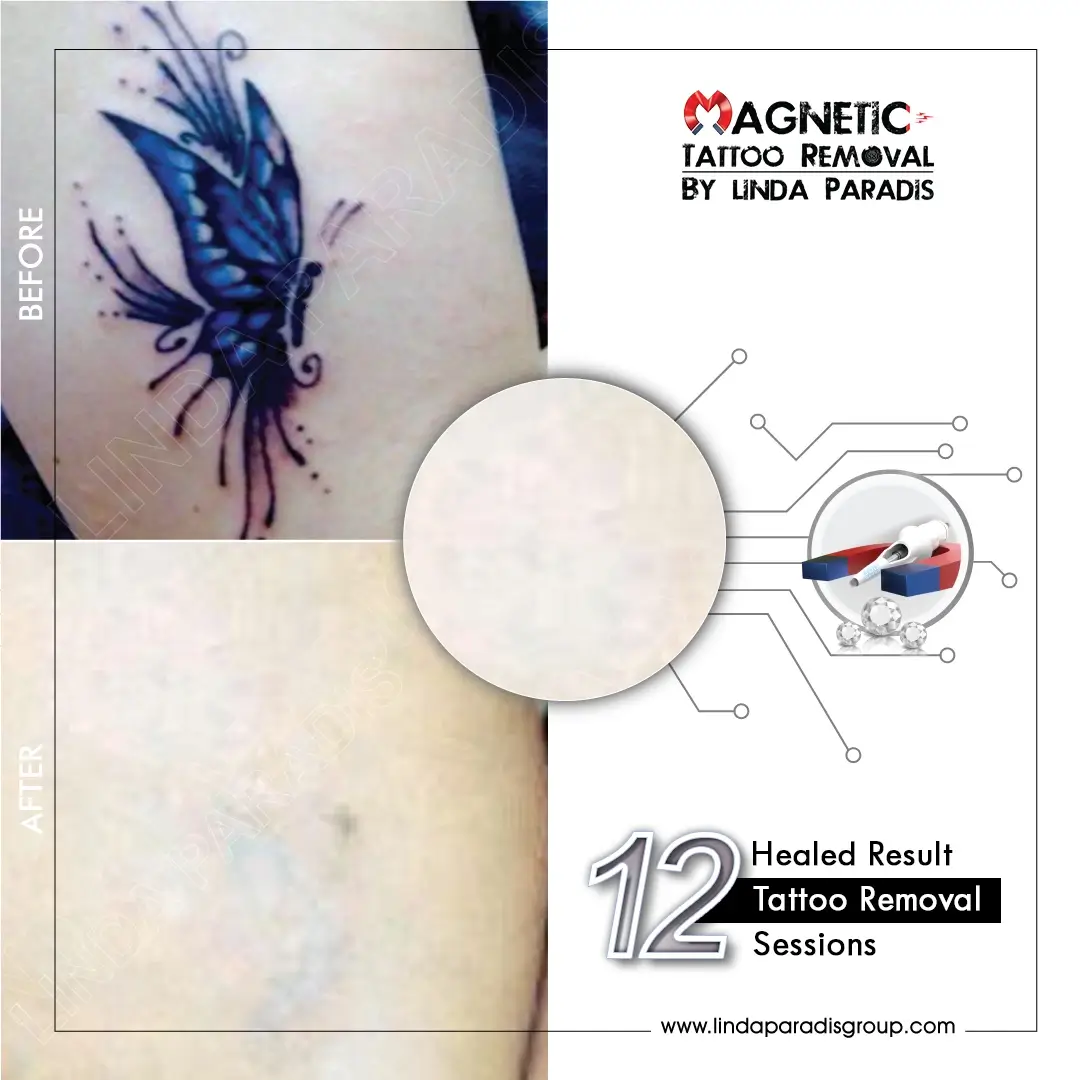
The most searched question in tattoo removal is also the most honest one: what do the results actually look like? Tattoo removal before and after documentation is the standard for judging any technique. Magnetic Tattoo Removal® results speak clearly.
Several key variables determine result speed and visibility:
- Pigment depth — how deeply the ink was deposited during the original procedure
- Ink saturation — how densely the pigment is packed (multiple layers, touch-ups)
- Ink age — older ink typically responds faster than fresh pigment
- Skin thickness — varies by body area and individual anatomy
- Ink composition — organic pigments generally respond faster than inorganic or mineral inks
Laser struggles with yellow, white, and green pigments. Magnetic Tattoo Removal® is effective on all ink types and all Fitzpatrick skin tones. That includes darker complexions, where laser carries a significant hyperpigmentation risk.
View our full before and after gallery to see documented results. It covers eyebrow tattoo removal, lip removal, body tattoo removal, and microblading correction.
How Many Sessions Does Tattoo Removal Take?
How many sessions to remove a tattoo depends on the same variables listed above. However, Magnetic Tattoo Removal® consistently needs fewer total sessions than an equivalent laser programme. Once healing is confirmed, it also needs no mandatory recovery intervals between sessions.
As a general framework:
- Eyebrow tattoo & microblading removal: typically 2–5 sessions depending on ink density and layering history
- Lip tattoo removal: 2–6 sessions; lip tissue is highly vascular and responds well
- Body tattoo removal: variable — small, lightly saturated tattoos may clear in 3–6 sessions; large, heavily saturated pieces require more
- Eyeliner removal: 2–4 sessions with the 52-needle configuration
Compare this to laser. Industry literature cites 6–12+ sessions as a standard range, with mandatory intervals of 6–8 weeks between sessions.
How long does tattoo removal take in total? A laser programme for a single tattoo can span 2–3 years. Magnetic Tattoo Removal® programmes typically finish in a fraction of that time.
Magnetic Tattoo Removal® vs. Laser vs. Saline: A Full Comparison
Three methods dominate the non-permanent tattoo removal market: laser (Q-switched and pico), saline removal, and Magnetic Tattoo Removal®. The table below gives an objective clinical comparison.
| Criteria | Magnetic Tattoo Removal® | Laser (Q-Switch / Pico) | Saline Removal |
|---|---|---|---|
| Pigment Fate | ✓ Extracted from body entirely | ✗ ~40% remains in body | ✗ Osmotic — partial extraction |
| Scarring Risk | ✓ None — no collagen trigger | ✗ Heat-induced scarring possible | ✗ Osmotic reaction can cause scarring |
| Pain Level | ✓ Minimal — no heat | ✗ High — thermal mechanism | Moderate |
| Effective on All Colours | ✓ Yes — including white & yellow | ✗ Struggles with light pigments | Partial |
| Safe for Dark Skin Tones | ✓ All Fitzpatrick types | ✗ Hyperpigmentation risk on darker tones | Moderate risk |
| Suitable for Eyebrow & PMU | ✓ Specifically designed for it | ✗ High risk in periocular zone | ✗ Limited precision |
| Hair Follicle Safety | ✓ Fully preserved | ✗ Can destroy follicles | Generally preserved |
| Downtime | ✓ Swimming permitted immediately | ✗ 2–4 weeks healing per session | 1–2 weeks healing |
| Practitioner Equipment Cost | ✓ Accessible starter investment | ✗ $150,000+ per device | Low |
| Total Programme Duration | ✓ Faster than laser in most cases | ✗ 2–3 years minimum for body tattoos | Moderate |
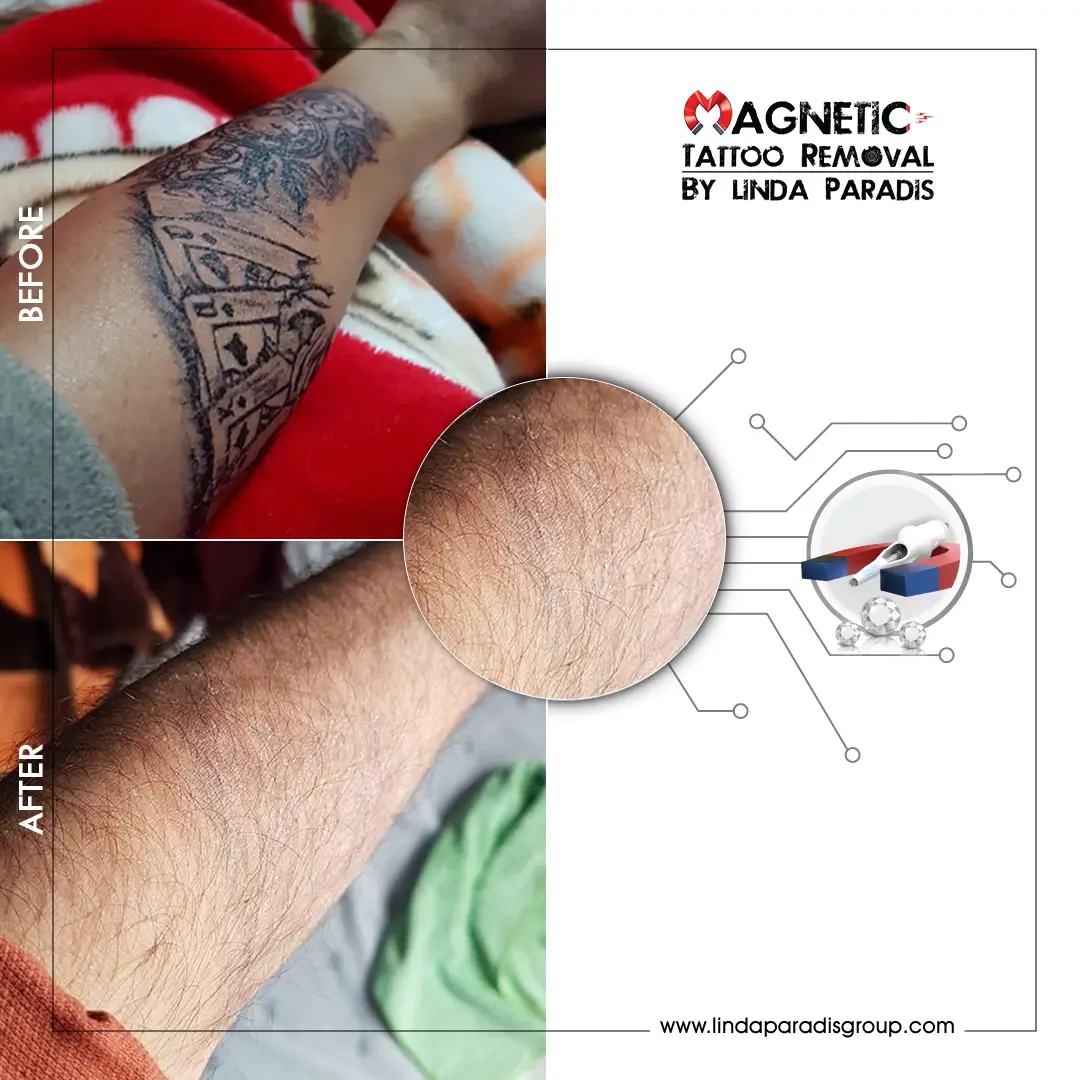
Emergency Tattoo Removal Case — Before & After · Magnetic Tattoo Removal®
Will Tattoo Removal Leave a Scar?
The concern about tattoo removal scarring is legitimate, and it is largely laser-specific. Fragmenting ink molecules requires thermal energy. That energy generates enough heat to damage the surrounding dermal tissue.
Repeat that damage across 6, 8, or 12 sessions, and fibrotic scarring becomes a documented risk. The risk is highest on thinner skin and darker complexions.
Magnetic Tattoo Removal® eliminates this risk at the mechanism level. The Non-Invasive Magnetic Needles do not penetrate the dermis, so they cannot stimulate the collagen cascade. That cascade causes keloid and hypertrophic scar formation. The square-needle geometry prevents it, because the needles physically cannot reach the dermal layer where collagen-producing fibroblasts reside.
The result is that skin integrity stays intact throughout the removal programme. Some clients had prior scarring from laser or acid-based removal methods. They have successfully undergone Magnetic Tattoo Removal® treatments on the affected areas.
Who Is Magnetic Tattoo Removal® For?
Clients seeking body tattoo removal
Professionals in industries with strict appearance policies often choose it. So do people whose circumstances have changed, and anyone who has been through unsatisfactory laser cycles. For all of them, the priority is a clean outcome without years of sessions and accumulated skin damage.
Clients seeking eyebrow, microblading, or permanent makeup removal
Trend-driven microblading from several years ago is a common regret. So are poorly executed permanent makeup, pigment oxidation that turns brows grey or orange, and asymmetric application. Magnetic Tattoo Removal® is the only non-laser technique with a patented mechanism validated specifically for these zones.
Aesthetic and PMU professionals
Adding a certified removal service is one of the fastest ways to increase revenue per client. It works in any permanent makeup or aesthetics practice. Training and certification is available online, and 2,000+ practitioners are already certified globally.
Frequently Asked Questions About Tattoo Removal
How much does tattoo removal cost?
Individual Magnetic Tattoo Removal® sessions typically cost €150–€250 on European markets and $150–$250 in the US. That is competitive with or below laser pricing, with a significantly superior safety and results profile. Total cost depends on the number of sessions required. That number varies by tattoo size, age, and ink density.
How long does tattoo removal take?
Magnetic Tattoo Removal® programmes are significantly shorter than laser. Facial and permanent makeup removal typically requires 2–6 sessions, while body tattoos vary. Laser programmes for body tattoos routinely span 2–3 years. Most Magnetic Tattoo Removal® programmes finish in a fraction of that time.
Does tattoo removal hurt?
With Magnetic Tattoo Removal®, discomfort is minimal. There is no heat, no burning, and no dermal penetration. Most clients describe a light surface pressure sensation. Laser removal, in contrast, produces intense thermal pain and post-session sensitivity that lasts several days.
Can all tattoo colours be removed?
Yes. Magnetic Tattoo Removal® is effective on all pigment types, including white (titanium-based), yellow, green, blue, and black. Laser struggles significantly with light-spectrum pigments. Magnetic Tattoo Removal® treats all ink colours using the same mechanism.
Is it safe for dark skin tones?
Yes. The technique is safe and effective across all Fitzpatrick skin types (I–VI). Laser carries a well-documented hyperpigmentation risk on deeper skin tones. Magnetic Tattoo Removal® uses no heat, so there is no thermal trigger for post-inflammatory hyperpigmentation.
Can I train to offer Magnetic Tattoo Removal® in my practice?
Yes. Linda Paradis Group offers online certification courses for PMU & microblading removal (Course 1), body tattoo removal (Course 2), and Detox & Snow Lips techniques (Course 3). Visit the training page for full curriculum and enrollment details.
The Patent Behind the Protocol
Double worldwide patents protect Magnetic Tattoo Removal®. They cover both the Non-Invasive Needle design and the Magnetic Needle technology. The United States Patent and Trademark Office granted them. Corresponding patents exist in China, Hong Kong, India, Vietnam, Russia, Japan, UK, Turkey, and across the European Union.
The technique's products carry CE certification, FDA regulation compliance, GCC approval, ISO certification, and CPNP registration. This is not a proprietary blend sold on claims alone. It is a regulatory-approved innovation with a documented 25-year track record. A global network of 2,000+ certified practitioners serves as proof of concept.
The standard for inclusion in that network is clear: reproducible, safe, gentle results. The practitioners who deliver them verify those results, and so do the clients who experience them. That standard has not changed since the first patent was filed in 2017. Compare every option in our guide to eyebrow tattoo removal methods. New to the field? Look at the beginners masterclass with Linda Paradis.
Ready to remove a tattoo — or add removal to your practice?
Explore Certification →