

Understanding your microblading removal options before you commit to a method
Microblading has become one of the most requested permanent makeup treatments in the world — and, inevitably, one of the most requested removals. A misjudged shape, a color shift toward blue or grey, an outdated brow trend, or simply a change of preference: the reasons vary, but the question practitioners hear most often is the same one clients are typing into Google right now — how do I get this removed safely?
For years, the answer defaulted to two options: saline tattoo removal or laser. Both have real uses. However, each carries limitations that are rarely explained clearly to clients before they book. This article breaks down how each method works, where each falls short, and where a magnetic, non-invasive approach like Magnetic Tattoo Removal® fits into a more complete removal protocol.
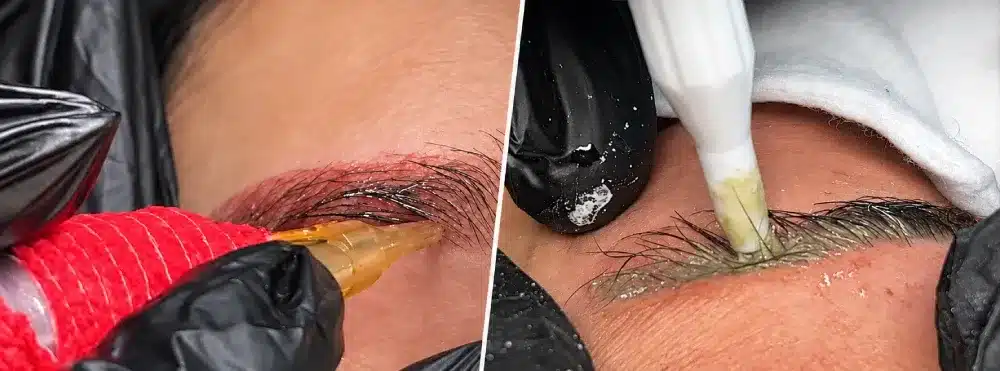
How Saline Works For Microblading Removal
Saline removal works by using a hypertonic salt solution, implanted into the skin with a needle in a pattern similar to the original tattooing process. Osmosis draws pigment toward the surface, where it scabs and is expelled as the skin heals.
Moreover, it's a technique many PMU artists already know, since it uses similar tools to microblading itself. In fact, that familiarity is exactly why it's often the first option offered — not necessarily because it's the most effective one for every case.
Where it falls short:
- Multiple sessions are typically needed, spaced weeks apart, and results vary significantly by skin type and pigment depth.
- Also, it remains an invasive, needle-based technique — with the same skin-trauma considerations as the original tattoo application.
- In addition, deeper or heavily saturated pigment often resists full saline lift, leaving visible shadowing.
How Laser Microblading Removal Works — and Why It's Often the Wrong Tool for PMU
Laser tattoo removal uses targeted light pulses to fragment ink particles so the body's lymphatic system can clear them. It's a well-established, FDA-recognized method for body ink. However, permanent makeup pigments behave differently under laser than body-tattoo ink does.
Where it falls short for microblading and brow/lip pigment specifically:
- Iron-oxide-based PMU pigments — common in brow and lip work — can oxidize under laser heat and turn black, grey, or blue instead of fading. This is a well-documented risk in the dermatology and PMU literature, not a rare edge case.
- Furthermore, laser sessions concentrate significant heat in a small, thin-skinned area (brows, lip line), raising the risk of textural change or scarring compared to body tattoo removal.
- Finally, cost and session count add up quickly, often exceeding what clients expect going in.
Master a Non-Invasive Removal Protocol
Learn the patented Magnetic Tattoo Removal® technique and offer clients a scientifically grounded alternative to saline and laser — fully online, self-paced.
Enroll in Magnetic Tattoo RemovalWhat This Means for Clients — and for Practitioners Recommending a Path Forward
Neither saline nor laser is "wrong" as a category — both have appropriate use cases in body tattoo removal. Unfortunately, the problem is that clients are frequently offered whichever method the practitioner already knows, rather than the method best suited to PMU pigment, skin type, and the result they actually want.
Therefore, this is precisely the gap Magnetic Tattoo Removal® was developed to address: a non-invasive, non-laser technique built specifically around the realities of PMU and cosmetic tattoo pigment — without the oxidation risk associated with laser on iron-oxide pigments, and without repeating the needle-based trauma of the original application.
Practitioners evaluating removal protocols for their brow, lip, and microblading clients should be asking three questions before recommending any method:
- What is the pigment composition, and does this method carry an oxidation or color-shift risk for it?
- How many sessions will genuinely be required to reach the client's expectation — not just the first visible change?
- Is the technique invasive, and does that match what this specific client is comfortable with?
The Certification Angle in Microblading Removal in Microblading Removal
For practitioners building a PMU or microblading business, removal isn't just a side service — it's a credibility signal. Clients researching "microblading removal" or "permanent makeup removal" today are actively looking for someone who can explain why one method suits their situation over another, not just perform a procedure. As a result, being certified in a non-invasive, non-laser protocol positions a practitioner to have that conversation with authority — and to capture a segment of demand that saline- and laser-only providers currently can't fully serve.
FAQ
Ready to Offer a Safer Removal Option?
Join the certified Magnetic Tattoo Removal practitioner network — 2,000+ professionals, 40+ countries.
Enroll in Magnetic Tattoo RemovalMagnetic Tattoo Removal® is a patented, non-invasive technique developed by Linda Paradis, protected across 12+ countries. Practitioner certification is available through Linda Paradis Group.