

Linda Paradis Group Insights — Business & Training
Profitability, setup cost, certification — the four questions every prospective practitioner searches for, answered against both laser and non-laser removal models.
"Is tattoo removal a good business to start?" Yes — with one caveat that decides everything else.
Search that question and three more surface every time: what does setup cost, what certification do you need, and is demand really growing? Below are direct answers — followed by the one decision that determines whether your investment becomes a high-ticket service or a stalled sideline: which removal technology you build your business on.
Is Tattoo Removal a Good Business to Start?
The category is expanding alongside the ongoing boom in permanent makeup, microblading, and body art. Every client who books a PMU or eyebrow tattoo appointment is a future correction candidate — fading pigment, color-shift, asymmetry, and simple changes of mind all drive steady demand for removal.
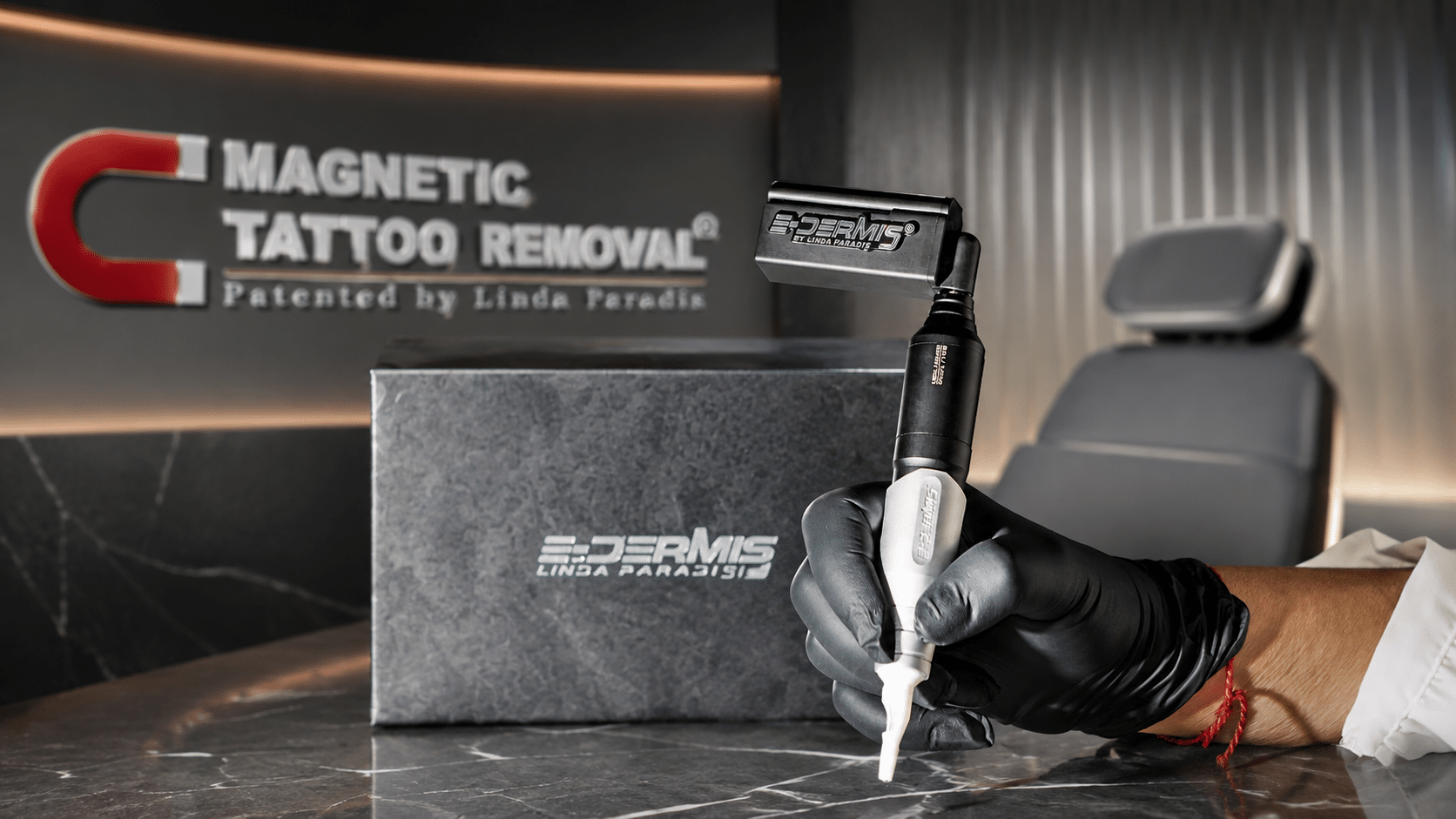
The caveat: not every removal method has built a sustainable business around it. Traditional laser tattoo removal carries real limitations — it struggles on white, yellow, and green pigment, performs poorly on darker Fitzpatrick skin tones, and multi-session protocols can stretch past a year with visible scarring risk. That's precisely why non-invasive alternatives like Magnetic Tattoo Removal® have gained ground: no laser equipment to buy, no scarring liability to manage, and a technique effective across all ink colors, ink types, and skin tones.
How Much Does It Cost to Set Up?
Setup cost is the single biggest variable between removal methods — and where most new practitioners get surprised.
- Certified laser device — the largest capital outlay in the business
- Medical-grade safety equipment, eyewear, ventilation
- State-specific licensing, sometimes requiring physician oversight
- Liability insurance calibrated to laser-injury risk
- Certification training in a specific application track
- Premium starter kit — patented magnetic needles + E-Dermis solution
- No laser licensing hurdle — FDA-regulated non-laser modality
- CE / CPNP registered across 40+ countries
This is the practical reason non-laser training-based models have become the lower-barrier entry point into the category: capital goes into skill and certified product, not a depreciating laser platform with ongoing compliance overhead.
What Certification Do I Need?
Requirements diverge sharply by method. Laser removal usually demands formal laser-safety certification and, in many regions, supervision by a licensed medical professional — verify local regulation before committing capital.
Magnetic Tattoo Removal certification is earned through structured training built around application: PMU and microblading removal, lips and eyeliner correction, full-body tattoo removal, and advanced protocols like Detox Brows and Snow Lips.
Training is a one-time mandatory requirement to purchase and use the patented needles and E-Dermis solution — delivered by the technique's own inventor and patent holder, not a third-party reseller. The bar is real: you're working directly on skin and need to understand anatomy, contraindications, and aftercare. But it's structured as an accessible certification pathway for licensed estheticians and PMU artists, not a multi-year medical credential.
How Much Can I Charge — and How Profitable Is It?
Laser tattoo removal is typically priced per session, with multiple sessions required and no guarantee of full pigment clearance — capping what a single client relationship is worth and stretching cash flow over many visits.
Non-invasive protocols are positioned differently: as a high-ticket specialist service layered onto an existing PMU or aesthetics practice, rather than a low-margin add-on.
Practitioner-reported ranges by specialization, driven by session pricing, kit-supported repeat visits, and the scarcity value of a patented, non-laser credential. Actual earnings depend on market, client volume, and pricing structure — not a guaranteed outcome.
"Choosing the right method to work with — or what to offer clients — is a very personal choice. But a non-aggressive, non-invasive, non-laser technique changes the shape of the business itself."
Which Technology Do You Build On?
Every question in the "starting a tattoo removal business" search cluster — cost, certification, profitability, demand — resolves faster once you pick a lane. Laser and non-laser aren't competing flavors of the same service; they're different business models, with different capital structures, different regulatory exposure, and different ceilings on what you can charge.
If the goal is a premium, differentiated service — one that works across every skin tone and ink color, avoids scarring liability, and doesn't require a laser license to operate — a patented non-invasive technique closes that gap.
Jurisdictions
Practitioners
Served
Experience
Certify in the Technique — Not Just the Category
Compare the PMU/microblading, body tattoo removal, and advanced protocol tracks, or speak with the Linda Paradis Group team about which certification path fits your existing practice.