




Donnaliz Vella
11 months ago
I recently completed the Magnetic Tattoo Removal course with the incredible Linda Paradis, and it was an outstanding experience from start to finish.
Linda’s expertise, passion, and innovative approach make this training truly unique. The technique is non invasive, effective, and far superior to anything I’ve seen before. I even tried the method on myself and was impressed by how gentle and effective it is.
I’m proud to have graduated and even more honoured to now be Malta’s Ambassador for Magnetic Tattoo Removal.
This training has truly elevated my professional journey.

Daniel Zammit
11 months ago
This system is truly a revolution in the removal industry. Not only does it correct and safely reverse potential mistakes made by others, giving clients a second chance, but it does so through a holistic, non-invasive approach. It is the only method I’ve experienced that genuinely extracts unwanted fluids rather than pushing chemicals deeper into the skin.
Linda Paradise is incredibly passionate about her craft and her brand, and her professionalism shines through in every treatment. Highly recommended.

Batilam Bati
1 year ago
Amazing experience at Linda Paradis Center in Casablanca City .... The team is professional, caring, and the results exceeded my expectations. Excellent quality of service highly recommended 👌👌😍

El k Tmiri
1 year ago
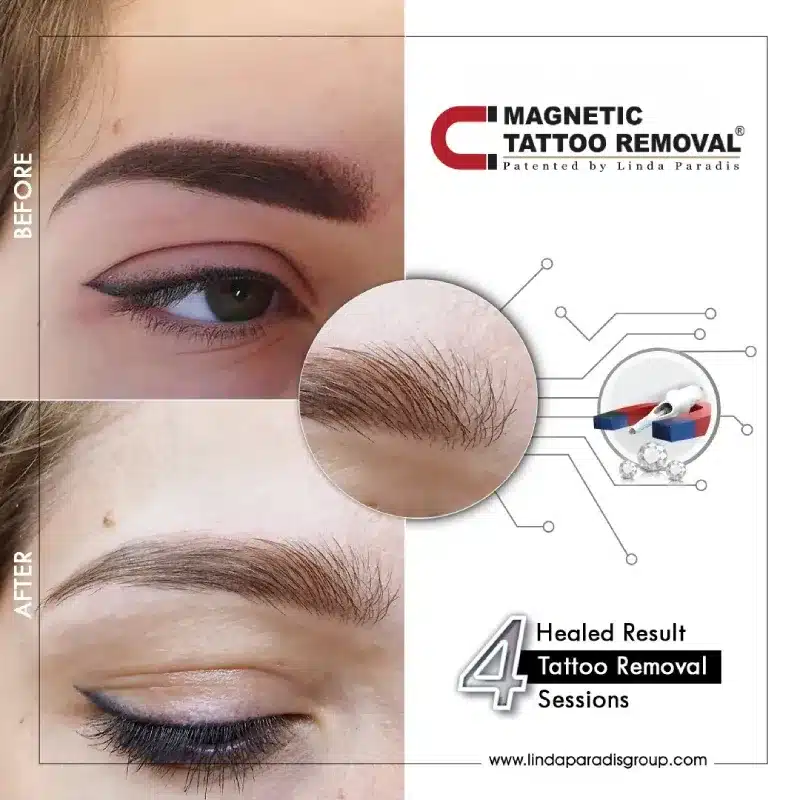
I feel truly blessed and grateful for my experience at Linda Paradis Detatouage Center. Choosing Linda’s technique instead of laser was one of the best decisions I’ve ever made. Not only did I achieve beautiful results, but I was amazed to see my natural brows growing back healthier and fuller,something I never thought possible.
Linda, your products and your technique are absolutely the best, and they reflect your wisdom, care, and dedication. No matter how many people try to put obstacles in your way, please remember that you are shining bright, and nothing can take that away. Haters may try, but when you believe in yourself and continue doing things with love and integrity, success is inevitable.
Thank God I found you, I am so happy and satisfied with my results. I wish you continued strength, health, and success on this journey. Keep shining, Linda, because you are truly making a positive difference in people’s lives. 🙏✨

Isabel Soares
1 year ago
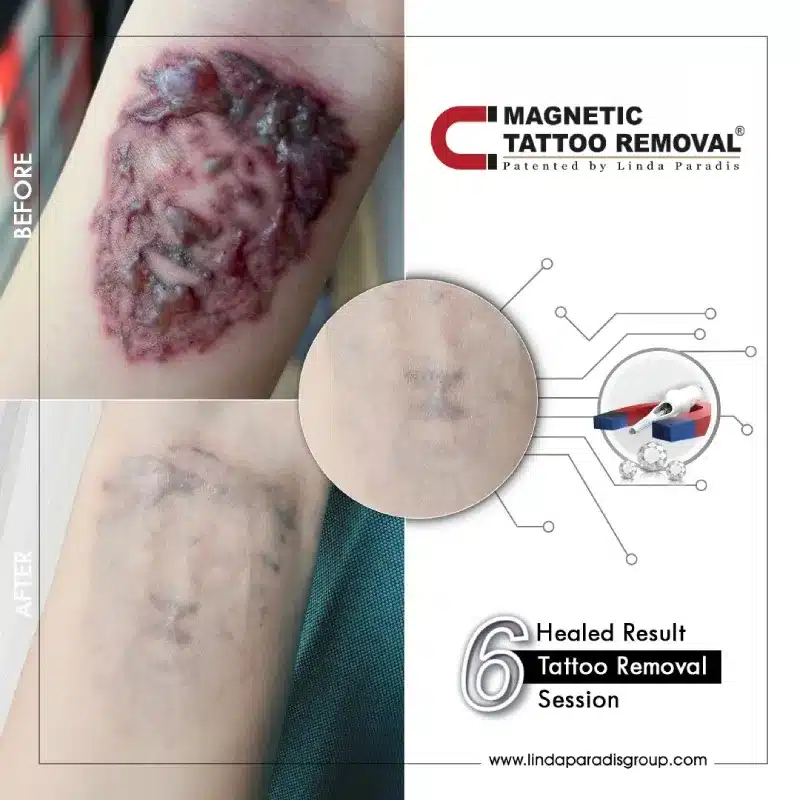
Magnetic Tattoo Removery method from Linda Paradis absolutely saved my life. I've been doing laser since 2020 and didn't see much difference, my skin got destroyed with laser. However, the Magnetic method literally removed the ink out of my skin and my tattoos are almost gone now! I highly recommend it to everyone!

Rita Holton
2 years ago
I recently completed the Linda Paradis Magnetic Tattoo Removal Course for PMU and the Master Course for Body Art Magnetic Tattoo Removal in early February 2025 in Miami, Florida. Linda Paradis' in-person training is truly top-notch and provided more than I expected!!
It was an absolute honor to be trained and mentored by the developer of this groundbreaking process. After completing the course, I gained a deeper and more robust understanding of skinology and my technique improved dramatically. As a result, I’ve been able to achieve even better results for my clients upon returning to my studio in my hometown.
Linda’s expertise, technical proficiency, and years of experience make her a true master in her craft. As an esthetician, certified PMU artist, and chemist, she brings a unique depth of knowledge that sets this training apart.
Her staff is incredibly supportive, ensuring that every student has the tools and guidance needed to succeed.
The Magnetic Tattoo Removal method is truly phenomenal and when combined with the specialized products Linda helped develop, the results are simply magnificent!!!
I highly recommend this course it’s a game-changer!

Dana InkedGlow
2 years ago
An unforgettable experience! Linda didn’t just teach me skills—she gave me knowledge and moments that I’ll carry with me forever. Her passion, expertise, and ability to inspire made such an impact on me. I know that this is by far the best procedure for safe and effective tattoo removal. I can’t wait to change peoples lives!
Highly recommend to anyone looking to master this amazing technique.
Thanks Linda
🤍🤍🤍Dana

katherine Kritsch
2 years ago
I've trained with Linda. My experience was excellent and removing pmu for clts have been exceptional... Thank you Linda

Jessica Silverstein
2 years ago
Being from New York, I’m always on the lookout for the latest and most innovative beauty techniques. I first stumbled upon Magnetic Tattoo Removal training a few years ago and, admittedly, I was skeptical. After following Linda’s page for some time, my curiosity grew, and I finally decided to take the leap—and I am so glad I did!
The training exceeded all my expectations. The depth of information provided, the integrity of the process, and the results compared to traditional laser removal truly blew me away. Linda is not only an incredible educator but also such a warm and fun person to learn from. She makes the entire experience enjoyable while ensuring you leave feeling confident and knowledgeable.
I absolutely loved training with her, and honestly, I was sad when it was over! If you're considering this course, don’t hesitate—it's worth every penny. Highly recommend!

Cathy Taylor
2 years ago
Impressive education. Being a licensed esthetician, I deeply value the significance of providing meticulous care to the skin, considering it as a living entity. The non-invasive treatment I experienced left me astonished by its ability to effectively eliminate permanent makeup pigments through the skin. Unlike laser tattoo removal, this technique proved to be considerably less painful. Moreover, it is suitable for individuals of all skin tones, eliminating any previous exclusionary barriers faced by those with darker complexions. To gauge the experience, I sought feedback from our live models, who mentioned feeling a level of discomfort during and after the treatment. They described a tingling sensation from the alcohol (cleansing part) and after the treatment, a subtle burning sensation similar to a sunburn. Witnessing these results instilled confidence in me, as I now have an innovative technique to offer my clients.

Marina Titova
2 years ago
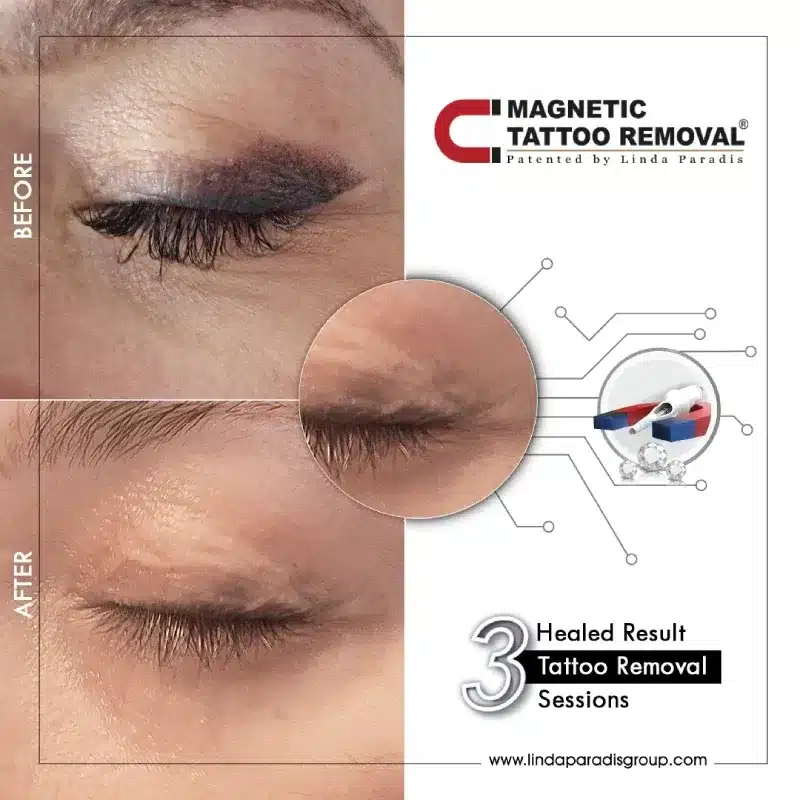
I received two magnetic removal treatments on my brows and I really liked the results: the sessions pulled a lot of pigment out (much more than my previous experience with saline that did very little), and were very gentle in terms of healing. I even got some new brow hair growth following the treatments. Most importantly, they achieved my goal: remove quite a bit of the pigment and tone down the ashiness, but not remove all of it as I like my brow shape and prefer not to do more PMU at this point. Thank you Linda and magnetic removal team!

Renee Bell
2 years ago
The class was enlightening! The 2 days are filled with lots of information regarding skin anatomy, theory and technique. I had hands on experience and left feeling comfortable and equipped to perform the technique on my own. Linda is an expert and passionate about helping others and it was a delight to be trained by her and join the mission.

Janice Davis
2 years ago
I Would Like To Take This Opportunity To Thank The World Renowned Linda Paradis of Magnetic Tattoo Removal For Such An Amazing Training Experience!!! The Course Far Exceeded My Expectations. Linda Is So Passionate And Explained The Entire Process Clearly And Without False Expectations. I Am Eternally Grateful For This Life Changing Opportunity And Experience!!!!!!!
If I Could Give 10 Stars I Would!!!! 👏🏼👏🏼👏🏼👏🏼👏🏼

Cristina Navarrete
2 years ago
Being new to the world of permanent make-up, I thought it was a good idea to attend the Las Vegas convention to learn more about this profession. I met Linda Paradis there, and ever since then I couldn’t stop thinking about learning Magnetic Tattoo Removal. I attended her class on face and body Magnetic Tattoo Removal with Linda Paradis, and I AM IN AWE of her and her technique. She is a strong, smart, giving, honest, knowledgeable, and humble person. I learned so much! What I liked the most is the incredible experience of REAL HANDS ON TRAINING. I learned to work and practice with not just one model but with several. Different kinds of skins, tattoos, tattoo shapes, body areas, and colors. I feel extremely confident after taking this class. Linda was right next to me, guiding me all the way through until not only me, but the entire class got it right. I loved our group of students. We all helped each other and I learned so much from them as well. Linda… I can never thank you enough for all your passion, consideration, and kindness I received from you. You truly have changed my life!. Learning this Magnetic Tattoo Removal technique will allow me to keep helping people feel better with themselves.

L A
2 years ago
I just came home from the PMU and Body Magnetic Tattoo Removal class in Miami. The theory contained so much valuable information that I feel confident to explain why this method is far superior versus other methods of removal. The hands on portion of the classes were so helpful and I feel prepared to offer this service to clients. I made a lot of friends that I can reach out to and am confident that Linda will continue to mentor every one of her students.

Della Tran
2 years ago
I recently attended the Magnetic tattoo removal by Linda Paradis and found it very helpful. The course covered all the important topics and had a good mix of theory and practical exercises. The materials provided were detailed and useful for future reference. The pace of the class was just right, making it easy to follow along. Overall, I highly recommend this training class to anyone looking to learn more about tattoo removal.
Our instructor, Mrs Linda, was excellent. She explained complex ideas clearly and made the class interesting with real-world examples. She encouraged questions and participation, which made learning more interactive and enjoyable.

Evelina Natanel
3 years ago
I recently took a class course on Magnetic Brow Removal by Linda Paradis, and I must say I was extremely impressed. Linda has an incredible desire to genuinely help people, and it shines through in her teaching. She is not only innovative but also an amazing person overall.
Linda's approach to Magnetic Brow Removal is truly unique. She goes above and beyond to ensure that her students understand the technique thoroughly. Her passion for the subject is evident in the way she teaches and the level of detail she provides.
One thing that stood out to me about Linda is her willingness to go the extra mile for her students. She is always available to answer questions and provide guidance, even outside of the classroom. This level of support is invaluable and truly sets her apart from other instructors.
Overall, I cannot recommend Linda Paradis' class course on Magnetic Brow Removal enough. If you have the opportunity to learn from her, I highly encourage you to do so. You will not only gain valuable skills but also be inspired by her passion and dedication.

A Royal Pampering
3 years ago
I originally heard about Magnetic Tattoo removal and Linda Paradis at my online PMU class. I was very intrigued, and after further research, I decided to jump on her next available class in Miami. Although it was a big investment for me, I truly believed in her revolutionary technique.
After completing her online course and attending her hands-on portion, I feel so empowered and ready to conquer this brand new field of tattoo removal. Linda is a very passionate trainer, and I loved her teaching style. I learned so much, and she will make sure you nail every aspect of her technique before she sets you free to work on the public. We had an amazing group of students that really made this whole experience the best training I have EVER attended. Worth every penny!!
Linda, we love you. You're one in a million.

Angie Byboth-Malmin
3 years ago
Easy way to remove tattoos especially magical on those hard to get red iron oxide brows!

Catherine Lynch
3 years ago
I believe the Magnetic Removal technique is the gold standard of removal options on the market. I appreciated the hands on experience that was provided with the MasterClass. I’m proud to be offering this removal service to my clients!

Brandi Rose Dalglish
3 years ago
I took Linda’s course in Houston and I can wholeheartedly say that this was the most informative course I’ve ever taken. The technique/invention is cutting edge and I truly feel grateful to be on the forefront of a safe & effective tattoo removal method.
The course is packed with information and practice…not a moment was wasted! Linda was warm, enthusiastic, and thorough. She
delivered the technique and knowledge in a way that everyone in the class could understand, which, as a college instructor myself, I could recognize and appreciate. I cannot say enough great things about Linda and about magnetic tattoo removal. If you are on the fence about taking the class and/or having the procedure done, feel free to reach out to me.

Destiny DLP
3 years ago
I’ve gone twice to remove my micro blading for my eyebrows. And I have to say this technique by far is definitely worth it I’ve done 4-5 sessions with other techniques and nothing has changed. But the mome I did this magnetic tattoo removal it’s a game changer I highly recommend it. You won’t be disappointed. And Ma’am Linda is super professional and knowledgeable with all that she does. She also is attentive to her client and comfort during. Hands down 5 stars.

Victoria ezana
3 years ago
This magnetic tattoo removal technique is the best. I've been using it for 3 years now, and my customers are delighted with it, with zero consequences, but all I have to do is explain to customers that they need to be patient, and we end up with excellent results. I'm a beautician in Paris, France and I've tested many existing techniques in Europe since 2017 (acid, saline etc...) and few results with disasters in the end. I would like to thank Linda Paradis for this incredible revolution.

Valerie Yackel
3 years ago
I attended Linda's PMU And body tattoo removal course. The wealth of knowledge is untouchable! Linda has done an incredible amount of research and it shows in her work and techniques. I consider myself very lucky to have had the opportunity to attend her course and look forward to implementing the techniques in my treatment room.